A technical treatise rarely arrives without context, and this one is no exception. The pages that follow — nearly three thousand of them — are the product of four decades of teaching, research, and quiet accumulation, and they carry with them a set of convictions, preferences, and influences that shape every chapter. The reader deserves to know what those are.
This Prolegomena is therefore not a formality. It is an honest account of why this book exists, how it was written, who it is for, and what the author brought to it — intellectually, stylistically, and philosophically. A reader who skips it will find the technical content perfectly accessible. But a reader who takes the time will understand not only what is being said, but why it is said the way it is — and that understanding, I believe, makes for a richer encounter with the work.
I. ORIGIN AND PURPOSE
I. ORIGIN AND PURPOSE

On the Title
The title of this work is intentionally reminiscent of Palladio's Four Books of Architecture.
Here, the fourfold structure reflects a pedagogical progression: from the historical foundations of structural analysis, through introductory and intermediate formulations, to advanced methods. The parallel lies in the conviction that even complex subjects benefit from a carefully staged exposition.
Genesis
As my academic career neared its twilight, I felt—perhaps with a touch of pride—that it was time to share the knowledge gathered over nearly four decades of teaching structural analysis. This magnum opus is the result.
Its origins lie in two parallel streams. The first consists of lecture notes accumulated and continuously refined over those same four decades, updated to reflect both advances in the field and the evolving needs of students. The second is a quieter collection gathered alongside the teaching: papers, monographs, historical curiosities, and technical details that rarely found their way into the classroom, either because the audience was not yet ready or because the depth required exceeded what a single course could accommodate.
A first complete draft was assembled from these two streams before the advent of artificial intelligence as a practical writing tool. What followed was not a delegation of authorial judgment but rather access to a third and effectively boundless source: through countless exchanges, pushbacks, rejections, and successive refinements, AI furnished a wealth of material that no single library visit or literature search could have matched. The decisions, however, remained entirely mine.
I have thought of my role throughout as that of a curator assembling an exhibit — one who receives input from distinct streams and must then decide what deserves a place in the collection and what does not, in which room each piece belongs, how it should be lit, and in what order a visitor ought to encounter it. For the structural analysis portion of the book, this curatorial task was relatively straightforward: the technical material follows a well-established pedagogical logic, and the sequence of chapters more or less imposes itself.
The historical part presented an altogether different challenge. How does one trace the evolution of structural analysis in a linear sequence of chapters — from the earliest discoveries of numbers and alphabets, through the great intellectual leaps of antiquity and the Renaissance, all the way to the finite element method — while also doing justice to themes that are inherently thematic rather than chronological? Some chapters follow the thread of time; others cut across it, gathering ideas, figures, and developments that belong together by subject rather than by century. Navigating that tension, deciding when to follow the timeline and when to abandon it, proved to be the most demanding curatorial judgment of all.

Coverage
Broadly speaking the book is divided into four parts:
Book I
This book provides an in-depth exploration of the history of structural analysis. While it does not claim to be exhaustive, I found this aspect of the treatise particularly engaging to write. Initially, I selected key events and figures without strict constraints, but as the narrative reached the era of Galileo Galilei, a more structured and disciplined approach became necessary. Even then, organizing this first book proved challenging: How should it be partitioned? The coverage is partially chronological, partially topical, and at times both. Consequently, there is substantial overlap among sections—but in each case, the material is examined from a distinct perspective. I have used hyperlinks liberally to connect related discussions across chapters.
Book II
This book covers the material one would typically expect in a first course in structural analysis, following the study of Statics and Mechanics of Deformable Bodies. However, I have significantly broadened the scope beyond the introductory level—hence the subtitle Fundamentals; Analytical. Topics often inadequately treated in standard textbooks, such as cables, arches, and three-dimensional structures, receive thorough coverage here. I have also included advanced subjects such as plates and shells, which are rarely addressed at this stage but essential for a complete understanding. The book concludes with a chapter on approximate methods and preliminary design. I believe strongly that structural analysis should not exist in isolation; students must develop an intuition for design alongside their analytical skills, understanding how analysis informs and enables the decisions that follow.
Book III
This book addresses what is often called "Matrix Structural Analysis," but it is fundamentally a treatise on the finite element method. The first part covers the direct stiffness method in detail, including its computer implementation for framework structures. This is followed by an extensive treatment of variational methods—the calculus of variations, the principle of virtual work, and energy theorems—which form the theoretical bedrock upon which I then introduce the finite element method for continuum elements.
A common misconception holds that matrix methods for frameworks are "easier" than finite elements for continua. In fact, the opposite is often true. Continuum elements deal with stress and strain tensors—elegant and well-defined quantities. Framework elements, in their most general form, involve three sets of forces and three sets of moments at each node, along with their associated displacements and rotations. The interactions among these force and moment components are subtle, and in my experience, students do not always appreciate their complexity.
Book IV
This book draws from a new course I personally introduced (and based on the superb thesis of some of my students), a program that has relatively few equivalents in the academic landscape. This course is primarily centered around the nonlinear analysis of framed structures. Additionally, it covers critical topics such as plasticity, stability, dynamics, and notably, Performance Based Earthquake Engineering.
Appendices
Throughout the treatise, I found it necessary to supplement the main text with additional material—sample MATLAB codes, an introduction to continuum mechanics, probability distribution functions, and more. These eighteen appendices serve as both reference and reinforcement, allowing readers to delve deeper without interrupting the primary narrative.
The approach I have adopted in this treatise can be likened to a Euclidean method: we begin with fundamental definitions and systematically build upon them in each subsequent chapter. The aim is to present the material so that each step flows logically from preceding ones, relying on basic notions, definitions, and earlier theorems as foundation. Diligent readers who follow this progression will be rewarded with a comprehensive, nearly encyclopedic understanding of structural analysis.
While the content in Books II–IV originates largely from my lecture notes, I have made extensive efforts to supplement, expand, and refine the material by consulting numerous sources. It is my sincere hope that all such sources have been properly acknowledged throughout the text.

Accompanying Lecture Notes
This book grew out of hundreds of lectures delivered throughout my career in a sequence of three courses on structural analysis. I have always used LaTeX and Beamer to prepare my course notes, which ultimately became the foundation of this work. Those lecture slides have been compiled into a single document, freely available for download.

Yet another book?
The question that may arise for the casual reader is, Why another book on Structural Analysis? It's a valid query considering that many existing textbooks on this subject tend to be repetitive and, in some cases, have seen numerous editions. Unfortunately, some of these texts can come across as uninspiring, overly simplified, and lacking in depth.
One common drawback is their limited coverage of the underlying theory, often accompanied by a reliance on straightforward and uncomplicated structural examples.
In response to these limitations, throughout this book, I have made a deliberate effort to establish a connection between the various procedures of structural analysis and the fundamental principles of applied mechanics and mathematics upon which they are built. This approach aims to provide readers with a more profound and insightful understanding of structural analysis, setting it apart from the typical offerings in this field.
II. STRUCTURAL PHILOSOPHY
II. STRUCTURAL PHILOSOPHY

Why All in one?
The decision to present the four books as a single, unified treatise is deliberate and grounded in two fundamental considerations. First, it reflects the conviction that engineers must remain continually aware of the historical processes through which present knowledge has emerged. The theories, methods, and computational frameworks employed today did not arise in isolation; they are the cumulative result of centuries of conceptual refinement, debate, and correction. An understanding of this lineage is not ancillary to technical competence, but an integral component of it.
Second, the structure of the work is intended to address historians of science and engineering, by emphasizing that historical inquiry gains depth and relevance when viewed in relation to the current state of the discipline. The mathematical formalisms, analytical techniques, and design principles that characterize modern structural analysis are not merely the endpoints of history; they provide essential context for interpreting the motivations, limitations, and achievements of earlier thinkers.
Accordingly, the treatise is conceived as an explicitly bidirectional framework. For the historian, it delineates a clear intellectual trajectory from the historical development of ideas to their present-day analytical formulation. For the engineer, it traces the reciprocal path—from contemporary practice and formal methods back to their historical origins. By sustaining this two-way dialogue, the work integrates historical insight and technical rigor into a coherent and mutually reinforcing whole. Navigation between these two perspectives is facilitated through explicit cross-references and hyperlinks, such as the following:
Finally, beyond these conceptual motivations, the decision to consolidate the four books into a single volume also serves a pedagogical and technical purpose. Presenting introductory, intermediate, and advanced levels of structural analysis within one continuous work facilitates a seamless progression across levels of complexity, while ensuring strict consistency of notation, definitions, and conventions throughout. This unification—rare in the literature—allows the reader to move fluidly from foundational concepts to advanced formulations within a single, coherent PDF, eliminating the fragmentation and notational discontinuities that typically arise when material is dispersed across multiple volumes.
Mechanics
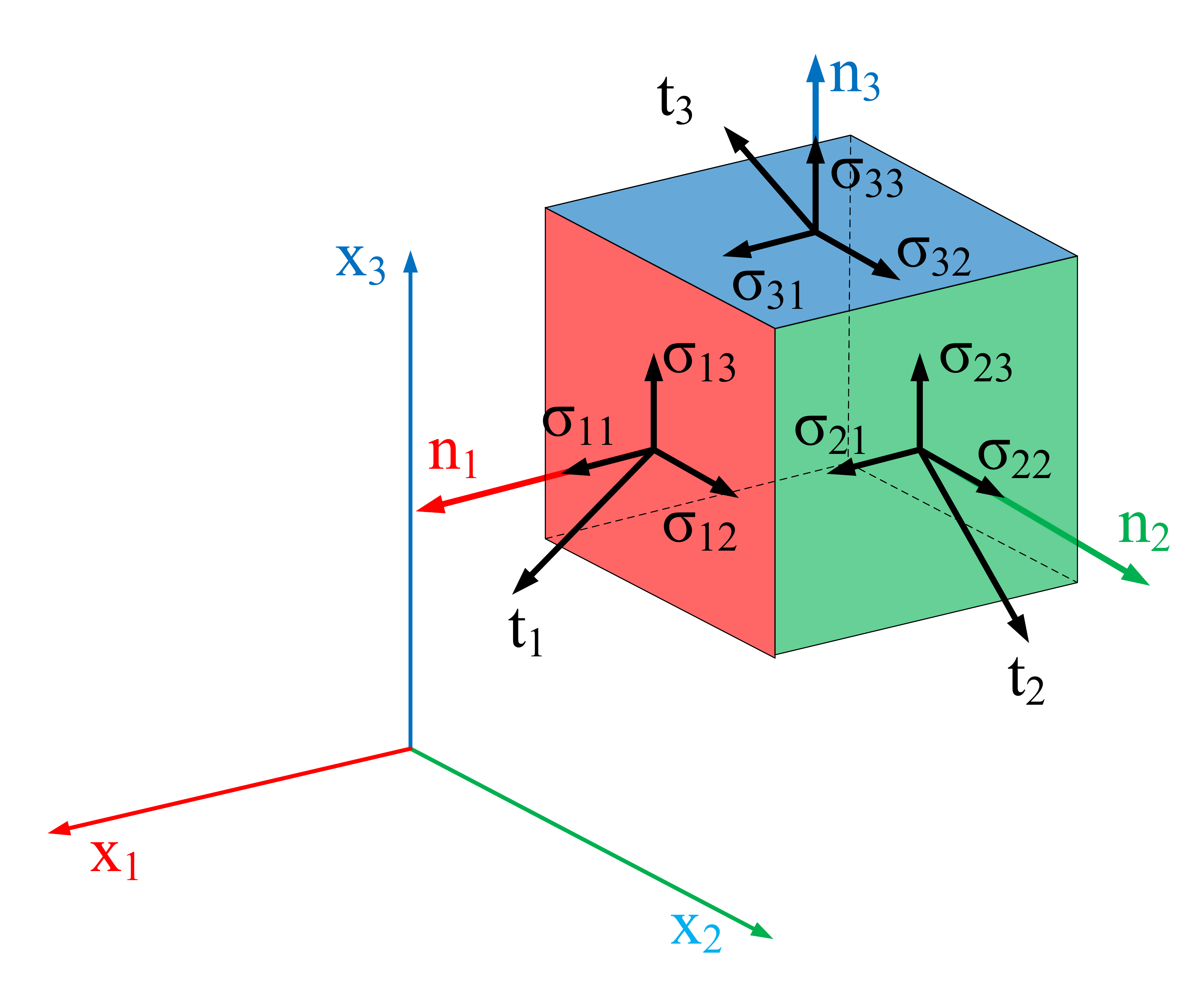
Let us be clear: structural engineering is, at its core, applied mechanics. While this is often sufficient to resolve routine engineering problems, it does not absolve us from understanding where our tools come from. There is a continuing need to (1) uphold the same analytical and mathematical rigor that governs mechanics, and (2) when necessary, return explicitly to mechanics itself. Too often, this foundation is neglected in engineering practice, replaced by procedural knowledge and numerical convenience. Having deliberately maintained one foot in mechanics and the other in engineering throughout my career, I want this book to reflect that stance. For this reason, every equation presented here is traceable to first principles, and I have included an appendix introducing essential concepts of continuum mechanics, as well as another paying tribute to Westergaard—an engineer who solved profoundly practical problems by reasoning directly from fundamental mechanics.
III. AUDIENCE AND USAGE
III. AUDIENCE AND USAGE

Audience

Students
This book is well-suited for a sequence of three consecutive courses: Structural Analysis, Intermediate Structural Analysis, and Nonlinear Structural Analysis. It consolidates into a single volume what would traditionally require at least two separate textbooks. Moreover, it maintains a consistent notation throughout and includes illustrative examples intentionally designed to be challenging. However, it should be noted that this book is intended for a "mature audience". By this, I mean students who are not seeking a simplified and verbose treatment of the basics. Therefore, for most students, this book should not be assigned as the primary textbook in a course. Instead, it is best suited for students who are motivated to explore sub-topics that are traditionally not covered in depth. This book will also prove valuable to those students who desire a "unified" approach to structural engineering, characterized by consistent notation and a coherent philosophical perspective. It offers a smooth transition from fundamental concepts to intermediate and advanced topics.

Educators
Structural engineering instructors will find this book a valuable resource, particularly as an antidote to the oversimplification that plagues many popular textbooks. Its breadth and depth make it well suited for assigning thesis topics, term projects, or Ph.D. qualifying exam problems.

Engineers
This book is also intended for structural engineers who are discerning enough to step away from computer programs and delve into the elegance of analytical solutions, which can offer far more value than commonly realized. Often, many engineers rush to computer-based solutions without first exploring the possibility of obtaining precise or approximate analytical solutions, which could then be validated using software.
Historians
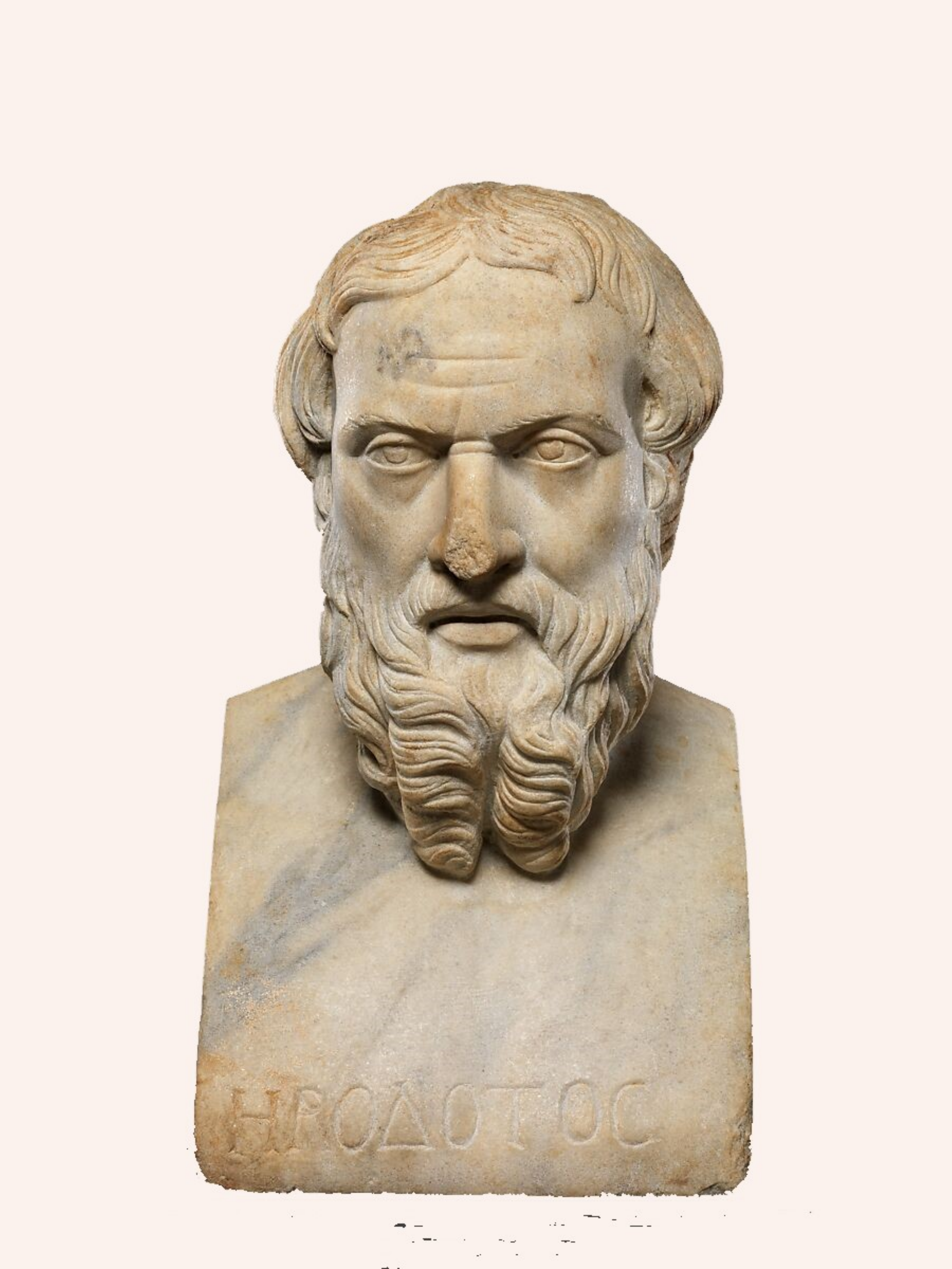
The first of the four books provides a comprehensive exploration of the history of structural analysis. Apart from the renowned classical works that have tackled this subject, this book offers the most exhaustive coverage available in the realm of structural analysis literature.

Navigation
Because of the hundreds of internal hyperlinks, readers should not hesitate to follow them, knowing that a simple ALT+Left Arrow returns to the invoking page (and ALT+Right Arrow takes you back to the hyperlink)
IV. PERSONAL INFLUENCES AND TEACHING
IV. PERSONAL INFLUENCES AND TEACHING
🌍 Foreign Influence
During my nine-year collaboration with the Tokyo Electric Power Company (TEPCO) on the nonlinear seismic analysis of tall arch dams, I considered myself extraordinarily fortunate. Around the six-year mark, I believed our work was essentially complete, only to be met with my counterpart's firm response: No! No! Prof. Saouma, in Japan, a program must not only function flawlessly, it must also possess aesthetic beauty. This remark, made by Mr. Yagome, encapsulated a deeply rooted Japanese principle: uncompromising attention to detail, an insistence on excellence, and the pursuit of harmony extending well beyond mere technical correctness.
I also had the good fortune to own a family house in Switzerland, where we spent many summers as well as several sabbatical periods. From the Swiss, I learned—quietly but decisively—the importance of precision, of work executed without shortcuts, and of resisting any artificial sense of urgency. In Switzerland, things are done thoroughly, deliberately, and correctly, with no perceived need to rush. Attention to detail is not a constraint but a virtue, and quality is understood as the natural outcome of patience, discipline, and craftsmanship.
This ethos stands in stark contrast to Orson Welles's oft-quoted remark: In Italy, for thirty years under the Borgias, they had warfare, terror, murder, and bloodshed, but they produced Michelangelo, Leonardo da Vinci, and the Renaissance. In Switzerland, they had brotherly love, five hundred years of democracy and peace—and what did that produce? The cuckoo clock. Well—not so fast, Orson. Switzerland has cultivated a relentless pursuit of horological "complications," pioneered high-precision micro-machinery, and produced a long lineage of outstanding architects and engineers. One should also recall the gentlemen of Basel—Euler and the Bernoullis—who stood not far behind Newton in shaping mechanics itself, laying foundations that would ultimately underpin structural analysis.
Finally, while growing up in Italy, I often heard the proverb Chi va piano, va sano e lontano—literally, "Those who go slowly, go safely and far." The message is unmistakable: do not rush, take the necessary time, and do things properly.
Together, these three countries—Japan, Switzerland, and Italy—have profoundly shaped my intellectual temperament and professional practice. More than any others, they have influenced the spirit in which this book was written: rigorous, patient, attentive to detail, and respectful of work done well.

Teaching at the University of Colorado
I taught at the University of Colorado from 1984 until 2023—a span of nearly forty years. Early in my career, I was profoundly influenced by two eminent colleagues: Professor Kurt Gerstle in structural engineering and Professor Kaspar Willam in structural mechanics. Their rigor, precision, and insistence on first principles left a lasting impression, and I strived throughout my career to emulate their approach: never shying away from theory, derivations, and the mathematical foundations that underpin our discipline.
I found the available textbooks unsatisfying. Many were, to put it plainly, dumbed down—limited to two-dimensional structures, devoid of any coverage of arches, and plagued by inconsistent notation across the progression from introductory to intermediate to advanced structural analysis (courses 3525, 4525, and 6525, respectively). These discontinuities struck me as both abrupt and pedagogically confusing. Assuming that most students would continue through the sequence, I introduced standard scholarly notation from the outset—much to the chagrin of some, but in service of their long-term understanding.
In the early years, teaching was a genuine pleasure. Students were motivated, curious, and willing to engage with challenging material. The difficulties began when the introductory course became a requirement for all civil and architectural engineering students. Environmental engineering students, eager to save the planet, often had little patience for structural analysis—though most were intellectually capable. Construction management students, meanwhile, wanted nothing beyond the simplest formulas and their direct application. Both groups could be quite vocal in their resistance to anything perceived as unnecessarily rigorous.
My philosophy was straightforward: given the limited number of formulas involved, students should understand the material conceptually rather than rely on rote memorization. Accordingly, my exams were closed-book and closed-notes. Each exam typically included one straightforward problem that everyone should solve, one of intermediate difficulty, and one challenging problem designed to distinguish exceptional students from the rest. The first exam often served as a wake-up call, with class averages below fifty percent. I did not believe in curving grades artificially; instead, I scaled the class distribution based on the performance of the top three students, who would receive an A. This approach, while fair in my view, resulted in a failure rate higher than in many other courses—a consequence I accepted as preferable to lowering standards.
To complicate matters further, even when students are caught cheating beyond any reasonable doubt, the University of Colorado tended to look the other way — after all, students are paying customers, and the University will bend over backwards to avoid antagonizing them. Simply put, unless a student openly admits to academic dishonesty, the institution extends the benefit of the doubt, leaving a frustrated faculty with no recourse but to accept the outcome.
Finally, a word on teaching evaluations. I was never overly preoccupied with them, though neither did I ignore them entirely. A twenty-year-old student, however bright, is not always in the best position to judge what he or she should be taught. Regrettably, at my institution these evaluations evolved into something of a popularity contest—one in which I declined to participate.
V. STYLE AND PRESENTATION
V. STYLE AND PRESENTATION
Style
A book encompasses not only its content but also its form, and it's in the form where individuality and personal style shine through. While there is generally consensus on the governing equations and principles of the content, the form or style can vary significantly. Some books are overly verbose, leading to confusion, while others omit derivations or provide overly simplistic examples. Therefore, the form of a book is deeply personal, reflecting the author's teaching style, focus of interest, and unique delivery style.
Throughout this book, I've incorporated personal comments, and the depth and breadth of coverage reflect my individual perspective on the subject matter. This means that some readers may find certain topics skimmed over (like influence lines), while others might perceive that I delve into arcane topics in excessive detail.
A note on language: English is not my mother tongue — it is, in fact, the fifth and last language I acquired. While AI has done much to refine the prose throughout this book, imperfections undoubtedly remain. I have done my best, and I ask only for the reader's understanding and a measure of generosity in return.
Notation
Notation in structural mechanics and engineering publications is frequently inconsistent. While using distinct notation sets for each chapter based on specific areas would have been more convenient for me as the author, it would have proved impractical and confusing for readers of a book that covers such a wide array of topics.
This was indeed one of the greatest challenges I faced. It quickly became evident that maintaining consistent notation across and within various disciplines would present difficulties for readers seeking a comprehensive understanding of the subject.
Therefore, I have made every effort to establish a uniform notation system throughout the book. Additionally, I have taken the initiative to redesign numerous figures to align with the book's notation rather than adhering strictly to the notation used within specific sub-disciplines.

Repetitions
In most textbooks, duplicating figures, equations, or previously covered text is typically avoided. However, due to the comprehensive nature of this book and to facilitate understanding, I have not hesitated to repeat certain elements from earlier sections. Additionally, I have made efforts to reference the original content when necessary.

Colors
While most engineering books are printed in grayscale — resulting in a flat, visually unstimulating appearance — this book is conceived exclusively for on-screen reading. Freed from the constraints of print, color has been embraced not as decoration but as a deliberate communicative tool. It appears liberally throughout the figures, where each hue carries a distinct and consistent meaning, and more broadly wherever it serves to sharpen clarity, guide the eye, or reinforce understanding.
Furthermore, I've chosen to depart from the typical white background, which can be perceived as somewhat aggressive, and instead opted for a background color with the hexadecimal code #fbf2ed. This choice draws inspiration from the Financial Times, albeit for entirely different reasons.
Lastly, you may notice that I occasionally use color within the text itself to highlight and emphasize certain points or concepts.
Title Font
The title font warrants a brief explanation. The letters on the cover are rendered inside square frames with crossed diagonals — a deliberate homage to Leonardo da Vinci's celebrated alphabet in De Divina Proportione (Venice, 1509), the treatise on mathematical proportions written by Luca Pacioli and illustrated by Leonardo. In that work, Leonardo constructed each capital letter geometrically, inscribed within a square and built from the same proportional rules governing architecture, the human body, and natural forms. The choice is not merely decorative. A square subdivided by its diagonals is also the simplest finite element — the very building block of the computational methods that occupy the bulk of this book. That the same geometric figure should appear in a Renaissance manuscript on proportion and in a modern stiffness matrix is less a coincidence than a reminder of the deep continuity between classical geometry and structural analysis. The body text is set in Palatino, designed by Hermann Zapf specifically for mathematical and technical literature, and whose calligraphic origins place it in the same broad humanist tradition as the manuscripts that inspired this work. From Leonardo's inscribed letters to the assembled stiffness matrix, the underlying discipline is the same: finding order and proportion in structure.
VI. CONCEPTION AND PRODUCTION
VI. CONCEPTION AND PRODUCTION

LaTeX
This book could not have been produced in a conventional word processor — only LaTeX, with its unrivalled mastery of typography, mathematics, cross-referencing, and document structure, could rise to such a challenge. Having relied on LaTeX for over 40 years provided a solid foundation, yet this project pushed its capabilities to their absolute limits. The preamble alone grew to nearly 1,400 lines, carefully orchestrating 80 packages that collectively govern symbolic notation, theorem and example environments, colour schemes, page geometry, running headers, index generation, bibliographic management, hyperlinks, and full multilingual support across five languages. Dozens of bespoke macros were crafted — many refined iteratively with the assistance of AI tools — to enforce absolute consistency across thousands of definitions, propositions, derivations, and figures spanning four volumes.
A persistent challenge was managing LaTeX register exhaustion: the morewrites package alone required a bespoke allocation of 50 additional write streams to prevent the dreaded no room for a new write error. Compilation of the complete work demands multiple sequential passes of pdfLaTeX, BibTeX, and MakeIndex, carefully coordinated by a dedicated build script that manages auxiliary files, multiple index streams, and separate bibliography refsections for each of the four parts independently.
For the LaTeX aficionado, the Preambule.tex is made freely available.

Matlab Codes
The books include a substantial collection of illustrative MATLAB codes, gathered in a dedicated appendix for ease of access. MATLAB is used extensively throughout the engineering and research communities for numerical linear algebra, algorithm development, and large-scale computational analysis, and its inclusion reflects this central role. The codes presented here are not intended to be optimized or stylistically compact; rather, they are written to emphasize correctness, transparency, and conceptual clarity, with the explicit aim of remaining accessible to readers without advanced programming expertise.

MathCad Codes
Mathcad has become a widely used computational environment among practicing structural engineers, owing to its natural mathematical syntax, integrated unit handling, and transparency of calculations. For illustrative purposes, a dedicated appendix of approximately 160 pages presents complete solutions to numerous example problems implemented in Mathcad, providing a direct bridge between analytical development and everyday professional computation.
Figures
I have dedicated meticulous attention to layout and visual presentation, personally crafting all figures using various tools—from Xfig on Unix to Visio on Windows—and authoring the MATLAB programs featured in the appendix. For the historical material in Book I, I frequently redrew figures from original sources to improve clarity or highlight key details.
Through this process, I have come to appreciate two insights: first, the paramount importance of producing figures that are clear, sharp, and concise; and second, the pedagogical value of recreating figures personally, which deepens one's understanding of the underlying concepts. In this regard, I identify more with the artistic sensibility of Vermeer—valuing depth and detail—than with the minimalism of Mondrian.
I confess to being somewhat obsessive about figures. Each one has been carefully prepared to ensure visual consistency, including the use of transparent backgrounds so that illustrations mesh seamlessly with the page color rather than jarring the eye with white rectangles. Small details, perhaps, but they matter.
VII. SOURCES AND ATTRIBUTION
VII. SOURCES AND ATTRIBUTION

References
Throughout Book I (History), I intentionally relied on primary sources for all references—many of which the reader can download by clicking the red logo  that follows the citation—and I avoided secondary sources except where they were truly necessary for a full understanding. Note that, wherever possible, all documents have been OCR-processed and their file sizes compressed.

Photographs
This work is licensed under a Creative Commons Attribution-NonCommercial-ShareAlike 4.0 International license. It is freely available, and I derive no financial benefit from its distribution.
In sourcing images, I have relied on what I believe to be reasonable "fair use" assessments. All figures from works published prior to 1900 are in the public domain, and photographs obtained through Google's image search were, to the best of my knowledge, licensed for noncommercial reuse. I have occasionally included images without full attribution—a task that, done rigorously for hundreds of figures, would have been prohibitively tedious. I allowed myself this liberty in the spirit of fair use and given the noncommercial nature of this work. Should any rights holder object, I will gladly provide proper credit or remove the material upon request.
Books Consulted
Book I: For this first book, I am much indebted to Google Scholar, the University of Colorado library (ILIAD) and the little known HathiTrust Digital Library.1
1 Founded in 2008, HathiTrust is a not-for-profit collaborative of academic and research libraries preserving 17+ million digitized items. HathiTrust offers reading access to the fullest extent allowable by U.S. copyright law, computational access to the entire corpus for scholarly research, and other emerging services based on the combined collection. HathiTrust members steward the collection — the largest set of digitized books managed by academic and research libraries — under the aims of scholarly, not corporate, interests.
Many of the historical documents cited in this work are available for download as PDF files. When a small PDF icon appears to the right of a citation, clicking it will retrieve a scanned copy of the original source. Readers are strongly encouraged to consult these primary references—they offer invaluable insight into the evolution of ideas and methods that shaped structural analysis, often revealing nuances and context that no secondary account can fully capture.
My fluency in French, Italian, and Spanish greatly facilitated access to sources that remain untranslated, while regrettably, my lack of Latin and German has limited direct engagement with certain foundational texts. Nevertheless, I have not hesitated to include and comment upon numerous quotes from original sources throughout this work, allowing readers to encounter the voices of historical figures firsthand and providing deeper insight into the development of the ideas presented.
Books II–IV: The following three books draw primarily from my lecture notes, encompassing solved problems including examples, homework assignments, and exams. While these materials were meticulously curated to maintain appropriate rigor, additional references proved essential.
Throughout the process of compiling my notes and writing this book, I sought inspiration from numerous texts that have influenced my theoretical coverage—often expanded upon—and guided the selection of numerical examples. Among the primary sources (though not an exhaustive list):
- Bhatt, P. 1986. Programming the Matrix Analysis of Skeletal Structures. E. Horwood.
- Billington, D. 1965. Thin Shell Concrete Structures. Princeton University: McGraw-Hill, Inc.
- Billington, David P., and Robert Mark. 1970. Civil Engineering--History, Heritage, and the Humanities: Background Papers from the First National Conference. Princeton, NJ: Department of Civil Engineering, Princeton University.
- Gerstle, K. 1974. Basic Structural Analysis. McGraw-Hill. (Out of print.)
- Kinney, J. S. 1957. Indeterminate Structural Analysis. Addison-Wesley. (Out of print.)
- Norris, C. H., and J. H. Wilbur. 1960. Elementary Structural Analysis. McGraw-Hill.
- Pilkey, W. D., and W. Wunderlich. 1994. Mechanics of Structures, Variational and Computational Methods. CRC Press.
- Przemieniecki, J. S. 1968. Theory of Matrix Structural Analysis. New York: McGraw-Hill. Reprinted by Courrier (formerly Dover).
Every effort has been made to provide proper credit throughout this work. Should any omissions exist, they are entirely unintentional, and I offer my sincere apologies for any such oversights.
VIII. AVAILABILITY AND STATISTICS
VIII. AVAILABILITY AND STATISTICS

Why is it free?
On the "supply" side of book writing, authors are typically driven by two motivations: financial reward, and/or the personal satisfaction—perhaps even recognition—that comes from contributing to one's field. In both cases, there is an expectation that the publisher will handle text editing, page layout, and marketing, tasks often beyond the author's expertise or interest. However, from my experience, even major publishers now engage in mass production: substantive editing has largely vanished, and various phases of publication are routinely outsourced overseas. The partnership that once existed between author and publisher has eroded.
Let us be candid: in our academic disciplines, very few authors receive royalties sufficient to cover even a transatlantic flight. And at this stage of my career, I am not seeking the recognition that comes with being a published author—whatever modest fame I may have earned rests on work already done.
On the "demand" side, students and readers have witnessed book prices soar to levels that strain personal budgets and library acquisitions alike. Publishers respond with clever strategies—renting books or individual chapters for limited periods, much like streaming a film—but these do little to address the fundamental problem of access.
As university professors, our responsibility is to acquire and share knowledge. We are reasonably compensated by our institutions for this mission. The meager royalties offered by publishers are simply not worth a Faustian bargain that places our work behind paywalls and out of reach of those who need it most.
Hence, this book may be freely downloaded and shared without restriction, in keeping with the spirit of open academic inquiry.

Web Site
A dedicated website has been created for this book. In addition to serving as the primary platform from which the book (and the associated lecture notes) can be downloaded, the site provides a forum for interaction with readers through a blog. This space allows readers to report errors, ask questions, or offer comments and feedback.
In parallel, I am considering a further initiative: using LaTeXML to generate a web-based version of the book, organized by chapter.

Some Statistics
This book spans approximately 2,970 pages across four volumes comprising 68 chapters (17, 22, 14, and 15 respectively), 15 appendices, 443 sections, 300 worked examples, 1,004 figures, 272 tables, roughly 3,000 equations, 852 citations, and 3,251 cross-reference links.
IX. ARTIFICIAL INTELLIGENCE
IX. ARTIFICIAL INTELLIGENCE

AI
What I thought was the completion of this book proved otherwise. As I neared what seemed a final draft, large language models became available and gradually proved to be invaluable assistants. I could have stopped much earlier, but these tools—ChatGPT (OpenAI)  and Claude (Anthropic)
  —fed my sense of perfectionism. Each new capability tempted me to refine further, verify one more time, polish another section, regenerate a summary table. The result was that the project extended roughly two years beyond what should have been its natural conclusion. The reader should not, however, be misled into thinking this was an effortless or passive indulgence. My perfectionism was relentless, and these tools enabled it; moreover, I was under no time constraint or deadline to finish, which meant there was nothing forcing me to stop. Their very availability meant I could always find one more thing to improve.
The initial manuscript, including nearly all of Book I, was completed entirely without AI involvement. The historical narrative it contains represents years of reading primary sources and careful synthesis—work substantially done before I ever engaged with these tools. When I did begin using them, it was initially only to polish English prose and fill minor gaps. It soon became apparent, however, that limiting myself to such modest usage would have been a grave mistake. These tools had capabilities far beyond mere polishing; I should instead avail myself of their full reach to verify facts, synthesize disparate material, generate summary tables, and strengthen the overall narrative. The challenge was not to use AI, but to use it rigorously.
On the role of AI in this work: Throughout this project, AI assistance was never a shortcut but rather a structured dialogue partner for verification, synthesis, and refinement. My typical workflow begins with a draft or seed text, after which I engage the AI in a disciplined exchange: Is my account factually correct? Am I missing something important? Should peripheral details be cut? For nearly every topic appearing on these pages, the final text represents the product of a dozen or more exchanges—initial prompts, pushbacks rejecting what the AI produced, requests for clarification, direct challenges asking whether it was fully certain of its statements, and invariably, independent verification of the result. Beyond fact-checking, I rely on AI to merge related sections, smooth transitions between topics, and generate chronological tables and summaries.
My engagement with different AI tools evolved as the project progressed. I began with ChatGPT but quickly discovered that Claude excelled at cerebral tasks—nuanced editing, historical synthesis, scholarly dialogue—and was substantially superior for the historical synthesis required by Book I. However, when completing the final pages of Books II–IV, ChatGPT's latest model (Pro, generously provided by my daughter Sophie, who works at OpenAI) proved immensely superior for generating numerical examples and polishing mechanical aspects of the text.
On multiple occasions, I deliberately played one AI against the other as a verification strategy. I would obtain a response from one tool, then pose the same question or challenge to the other, asking it to independently evaluate or fact-check the first result. This cross-verification proved invaluable: Claude would often catch oversimplifications or logical leaps in ChatGPT's output, while ChatGPT excelled at detecting when Claude had been overly cautious or had missed a computational detail. This adversarial approach strengthened confidence in the final material and exposed weak points that required independent research or consultation with subject-matter experts.
For Book I (History), Claude's role was strictly limited: clarifying historical facts and polishing the entire document. I never allowed it to generate or substantially expand content. The text throughout Book I is entirely my own.
For Books II–IV (Structural Analysis), AI assistance was similarly limited and focused. It was used primarily to refine select derivations, fill gaps in theoretical coverage, and generate numerical examples for complex topics. In all cases, I carefully reviewed output to guard against hallucinated claims or stylistic overreach. An AI logo appears in these books only in two specific contexts: when a derivation was AI-assisted or when a section was written primarily by AI. It does not appear in sections I authored and merely polished with AI assistance.
Let one thing be said plainly: in 2026, to have refused AI would have been a grave mistake. There is no virtue in declining a tool of this reach and power—only a misplaced sense of intellectual purity that serves neither the author nor the reader. The historical Luddites were not, as caricature suggests, opposed to technology itself, but rather to its exploitation without regard for craft, skill, or human dignity. The modern charge of “Luddite” is now leveled at anyone who hesitates to embrace new tools. Yet there is a difference between reasoned skepticism and blanket refusal. The merit lies not in abstaining from AI but in exploiting it intelligently, rigorously, and always from a position of full authorial control. The structured dialogue, cross-verification between tools, and careful labeling described above are not constraints imposed by timidity; they are the architecture of that control. AI was a powerful instrument for verification, synthesis, and refinement; the judgment, the skepticism, and the final word were always mine.